
Do you ever think about how the Bible opens? “When God began to create…” Did you sense the liturgical pattern: the text calling, responding, repeating the chorus like a hymn? Imagine a cantor’s melodic chanting resonating through the walls of an ancient synagogue as a new Torah cycle began with God beginning to create!
God speaks, Let there be light! Let there be sky and seas, fields and fruit, animals and humanity
And that is what happens: light appears, skies awake, seas roll and people sing
And God sees all this. God sees the goodness of all creation.
And God names the creation: sun, stars, seeds, nectarines, and narwhals
And on the sixth day God created humanity in the very image of God
in the image of God, God creates us, beloved, God creates us
And God looked at everything and declared the whole creation was supremely good.
On the seventh day, God rests from all the work that God had done,
And God blessed the seventh day making it holy.
The Bible does not begin with a newspaper account of creation. Reporters, prophets, poets, and scientists are not created until day six. No one watched the earth’s first sunrise or felt the first rain. The Bible does not name a scribe or prophet who received the creation story straight from God. No, the Hebrew Bible begins with poetry, which is followed by an earthy campfire story giving us a second creation account. Poetry, parables, plays and songs hold a different and maybe deeper power than scientific or historical facts. As many funerals as I did for rocket scientists and airforce physicists in Tullahoma, no family ever asked me to include Newton’s Second Law of Motion or put the Periodic Table in the bulletin. On Christmas Eve, December 24, 1968, as Apollo 8 orbited the moon and it flew through a lunar sunrise and the crew sent a message back to earth… ten verses from Genesis 1, “In the Beginning God created…” These stories inspire us, not with creation science, but with something more powerful.
In Genesis One, The Word of God creates light, land, sky, sea, buffalo, bees, people and sabbath. God sees and names everything as good- and the whole creation as supremely good! In Genesis Two, God appears as a farmer in muck boots planting a garden and then like a potter shaping humanity from the clay. But then God blows God’s very own breath, breath and spirit being the same word in Hebrew, God blows life right into our muddy nostrils like a holy CPR bringing us to life by God’s very breath and Spirit. In the second story God, tasks us with naming all the plants and animals. You can force Genesis One and Two together, but to do so lessens both stories.
Did you notice that God created us to be vegetarians? “I now give to you all the plants on the earth…. These will be your food.” In Genesis 2, after the Lord God plants a garden and grows all these beautiful trees, God commands us, “Eat your fill from all of the garden’s trees (except for magic one)” If you get in a verbal tift with a creation science friend, mentioning God’s call for vegetarianism can lead to some interesting conversations!
How do we understand these poems, parables, stories and songs? Hebrews 11 tells us that we do not need creation science to worship the Creator. In fact reverence, faith, worship and awe reside somewhere beyond our understanding. (Philippians 4) “By faith we understand that the universe has been created by a word from God so that the visible came into existence from the invisible.” (Heb. 11) We can look at the world as an intricate, orderly accident or we can watch a bumble bee fumbling through the clover patch and whisper Hallelujah!
A young airforce friend of ours was sharing about his work with quarks and leptons. “Quarks and Leptons are thought to be the smallest building blocks of the universe. They have no size and contain nothing in them, but, if mixed correctly, they can build atoms, us, and the entire universe.” (Fermilab Today) As Seth explained his work in theoretical physics I wondered, what if some next generation Hadron Collider found some smaller yet particle or principle? What if in the corner of this sub-lepton-quark was a tiny Divine copyright stamp: maybe “@ I AM” in Hebrew or less likely The Cross and Flame? Would the Methodist unite? Would wars end? Would we all love our neighbors as ourselves? Values like faith, hope, and love; justice, truth, and community; awe, worship, and beauty; or peace, patience, kindness, goodness, and self-control are not easy to prove. There are no formulas for these.
Our Hebrew Bible opens with poetry. I think a poem or parable better prepares us for awe, worship and belief. Stories and songs stretch our capacity for hope, wonder and love. In Philippians 4, Paul invites us “beloved, whatever is true, whatever is honorable, whatever is just, whatever is pure, whatever is pleasing, whatever is commendable, if there is any excellence and if there is anything worthy of praise, think about these things.” So when are we looking around and seeing the goodness of life? When do we name it in praise?
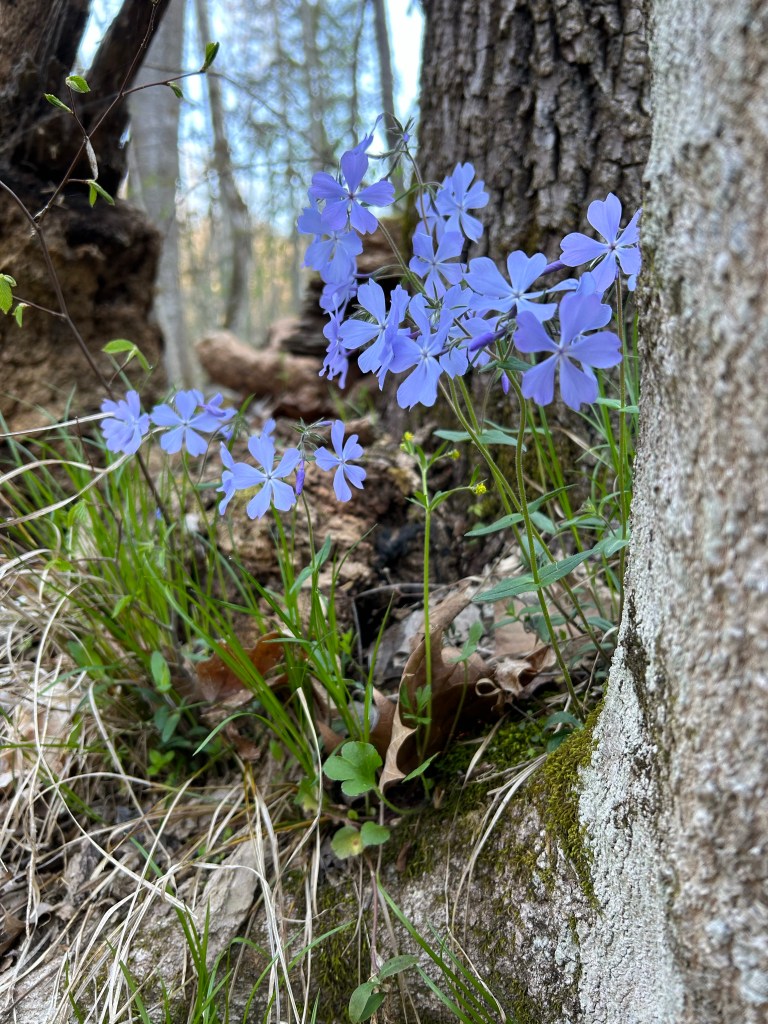
I want to invite us to practice awe, to stretch our capacity to praise this morning. As an act of worship Let’s actively think about things that are worthy of praise. On that first day, God said,“let there be light!” Light appeared. God sees the goodness of light, how it brings color into the world. Think of light. Ponder its goodness! Maybe think of the sun rising over the water, or light dancing in the eyes of someone you love, or maybe the joy of an illuminated screen? Take a moment to ponder the gift of light. Pray with me, God we thank you for light. Amen.
And on the second day, God made the sky. What is your favorite time of day? Is it when the sun’s rays crests the horizon.painting the sky with colors? Do you love to bask on the beach, or is it dusk or counting the stars? Ponder the sky. Lord, we praise you skies.
And on the third day, God made the waters and land, sea shore and streams, fruit trees and plants? Have you tasted this summer’s first perfect strawberry? Does some flavor call a Hallelujah to your lips? See God’s goodness. Lord, we celebrate the wonderful flavors of this life, especially———-. Amen
And God made the sun, moon and stars to mark the sacred seasons, days, and years. Now, you can do this alone, but if you want to slide over to a neighbor then feel free to take 1 minute to share a good day, week, or season in the past or present and then after 30 seconds switch and listen for their good season. God, we praise God for our holy moments and sacred seasons.
And on Day six, God created all the animals. Do you have a pet? Have you watched a rabbit hop or a hawk ride the wind? I saw a moose on a trail in Alaska, too close for comfort, but now I feel safe to praise God for them. Maybe together, we might just call out aloud one word praises for the creatures of this world we love?
And then God said, “Let us make humanity in our image so that they may take care of the fish of the sea, the birds in the sky, the livestock, all the earth, and all the crawling things on earth. God created humanity in God’s own image,in the divine image God created them, male and female God created them. And God blessed us!” Ponder people who blessed you or now uphold you, guide you, and teach you. Who has shone the light of God into your life? Maybe send them a text , write or call them thanking them for blessing you. Call someone specific to mind. Amen.
And God saw everything that God had made and the creation was supremely good. On the seventh day, God rested from all the work that God had done. God blessed the seventh day and made it holy, because on it God rested from all the work of creation. We need to pause, ponder and thank God for rest, remembering what renews us, love that liberates us and worship that inspires us. Lord, we rest in thee. amen
Oh let us pause, and like our Creator take time to see the goodness around us, to name it and lift up our hearts in songs of praise. Amen.
 pastorpaulpurdue