
On Tuesday, I was stuck. My Trinity Sunday was bogged down and going nowhere. At our weekly worship planning, I shared this stuckness with Heather, Kate, Emma and Matt. Maybe my mire began with a Trinity Sunday children’s sermon, where a well meaning leader explained the Trinity with the three leaves of the shamrock, only to be stumped when a child asked “what about 4 leaf clovers?” The Trinity is a holy mystery and mysteries by definition are “something that is difficult or impossible to understand or explain.” How do you explain the Trinity, a sunset, the cross, a child’s laugh, or Love?
The Articles of Religion, part of our United Methodist Church Constitution, offers a wonderful definition of the Trinity. It is article number One!
ARTICLE I — OF FAITH IN THE HOLY TRINITY: “There is but one living and true God, everlasting, without body or parts, of infinite power, wisdom, and goodness; the maker and preserver of all things, both visible and invisible. And in unity of this Godhead there are three persons, of one substance, power, and eternity—the Father, the Son, and the Holy Ghost.”
Fewer people say “Holy Ghost” than in 1784 when we adopted the Articles. Different names for God speak to different people. Some love the titles Father, Son and Holy Spirit that they grew up with. Belmont often uses “Creator, Redeemer, and Sustainer”. I like “Creator, Christ and Holy Spirit.”
Some people get nervous with feminine images for God. It is orthodox to refer to God as Mother. Article 1 says “There is but one living and true God, everlasting, without body or parts.” When we pray “Father or Mother” we reference God who exists beyond our understanding of gender.
Isaiah 66 offers beautiful images of God as a mother: “drink, drink and be satisfied… You will nurse and be carried on the hip and bounced upon the knee. As a mother comforts her child, so I will comfort you; you will be comforted.” It is plenty Trinitarian to pray “in the name of God our Mother, Christ born of woman, and Spirit of Love.”
I think God welcomes any heartfelt prayer and I imagine God does not get hung up on our words. But no matter the names of the three, the threeness of the Trinity remains an unexplainable holy mystery: “There is but one living and true God … in unity of this Godhead there are three persons, of one substance, power, and eternity.”
On Tuesday, when I shared my lament over Trinity Sunday, my clergy colleagues quickly shared how they loved Trinity Sunday, and how the Trinity was beautiful to them. Rev. Doctor Matt Webb spoke of how the Trinity is a deeply non-binary image for God. The Trinity shakes up our notions of authority and power, it is deeply non-hierarchical: “in unity of the Godhead there are three persons, of one substance, power, and eternity.” Three united within an essential oneness- not parent to child, not supervisor to subordinate, not male or female, not lord and vassal, not judge and judged, but three equals sharing all things. Could the Trinity break our tendency to focus on the barriers that divide us? The Rev. Doctor Kate Fields, reminded me of Jürgen Moltmann’s work around the Spirit as a movement or dance of Love between God as Creator and Christ as God Incarnate.
The essence of the Trinity is that God exists in relationship. Our wonderful staff helped me get unstuck, and move beyond my need to categorize and regulate, inviting me to embrace the wonder of God existing in relationship. God often uses relationships to help us become unstuck. God exists in “relationship”. God is love and Love demands a context.
So often we want to know: “who is in charge? The Trinity kind of blows up that whole patriarchal way of thinking calling us to radical equality that exists at the very center of the Godhead. God is united. God is not above: Father over Son or Creator over Spirit. Love is not about who holds the power, but who shares their power to benefit the others. 1 John 4 offers us a relational prism to view God: “Dear friends, let’s love each other, because love is from God, and everyone who loves is born from God and knows God… because God is love. How do we see the love of God? God sent God’s only Child into the world so that we can live through God in human form. This is love: not that we loved God but that God loved us and sent God’s very own Child to clean up our mess. Dear friends, if God loved us this way, we also ought to love each other. … If we love each other, God remains in us and his love is made perfect in us.” (adapted) John offers a messy portrait of the Trinity that spills out in love and pulls humanity into the Love of God.
Echoing these words and our John 3:16 passage, Charles Wesley describes the incarnation and the cross in terms of a seamless movement of God into our human world and need.
“He left his Father’s throne above,
So free, so infinite God’s grace;
Emptied Himself of all but love,
And bled for Adam’s helpless race;
‘Tis mercy all, immense and free;
For, O my God, it found me.”
The Trinity calls us to abandon our binary notions of power, authority, dominion, rule, sovereignty, lordship, kingdom, separation, delegation, division. God goes and helps. Love goes and helps. So often we want to know: “who is in charge? The Trinity blows up that whole patriarchal way of thinking: God exists in a seamless and boundless love. Perfect Love does not need an organizational leadership chart.
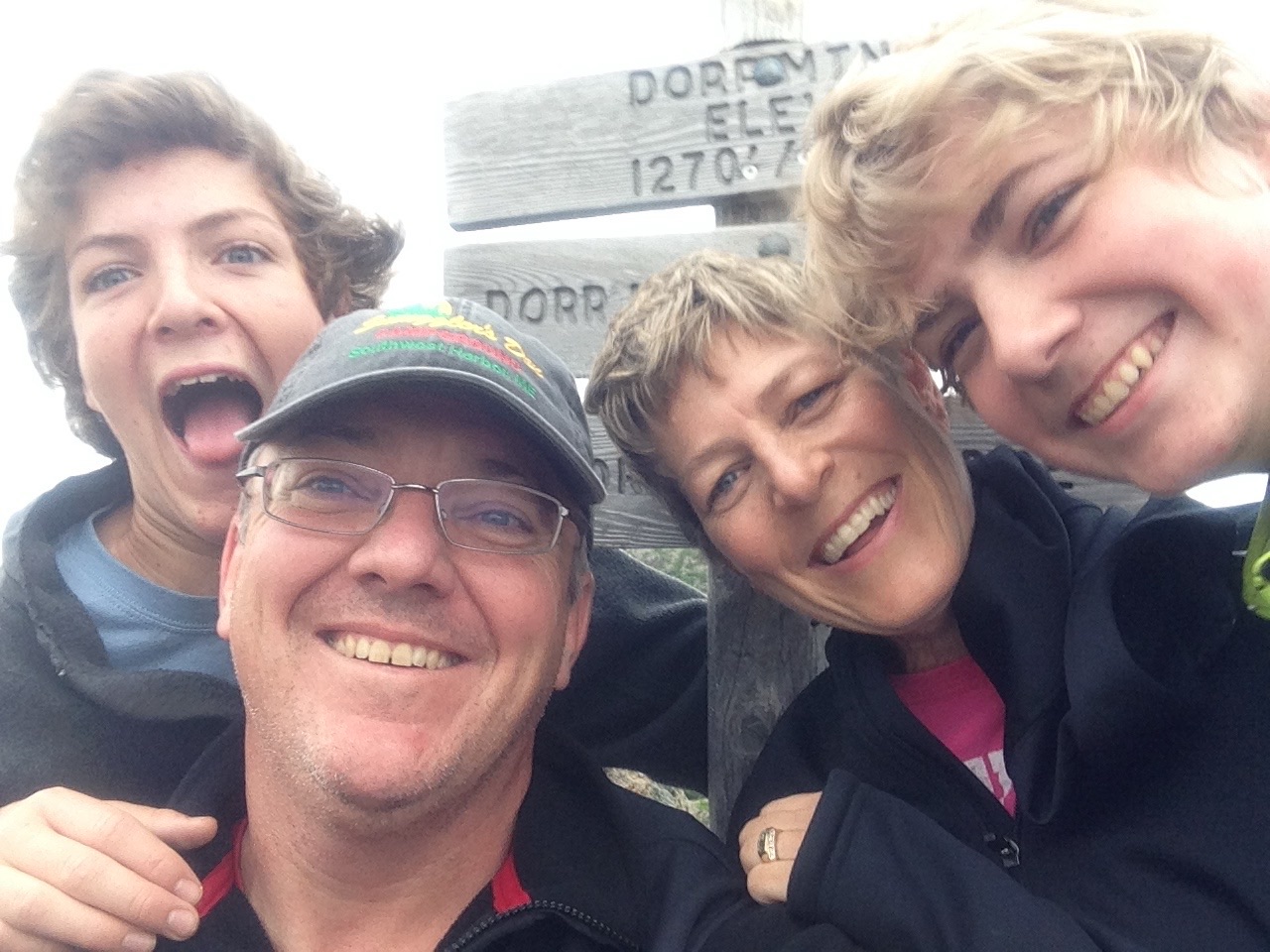
On a more mundane level, several years ago, I picked up Caleb, Lewis and some of their middle school friends from a sleepover at their friend’s Roger’s house. (Name changed to protect the innocent and perhaps guilty.) As we drove home they were a bit dumbstruck that their friend had to call his dad at work to get his permission, even though their friend’s mom was home. Lewis quipped “Man, Roger’s dad sure is in charge of their house” Feeling puckish, I blurted out, “Who is in charge of our house?” They took a long pause, the pause lingered so long I worried I might not like their answer but then Caleb said, “that’s a good question, I am not sure who is in charge, you or mom.” Lewis chimed in, “I think Mom is in charge of some things and maybe you others I guess, but I am not sure.” There are things Connie and I might do differently, but I count that answer as a huge win for us. Love is not about who is in charge, whose permission you need. Love is seamless and messy.
The Trinity is not a picture of three hierarchical gods battling for power in the world organization chart, but God at God’s core existing in unity, kindness, goodness, peace, joy, faithfulness, gentleness, harmony and love. Hold that in your prayers this week. And as you dwell with God, let those attributes flow into your prayers.
The idea of God existing in “relationship” pulled my mind to Romans 8 where Paul tells that in the end “nothing can separate us from the love of God made manifest in Christ Jesus”. Now, if “There is but one living and true God, who exists in unity three persons, of one substance, power, and eternity” that means there is no separation in God. Maybe in the end, when we finally fully know God ( 1 Cor 13) all that separates us and divides us from God, from our belovedness, and from one another is washed away by Love. Maybe, we enter into the seamless unity of God, where nothing can separate us from Love? That is just my pondering, and guessing, but I hope I am right. But I do know that I am thankful for my relationship with our wonderful clergy staff: Kate, Matt, Emma and Heather who this week helped me think about our first Methodist Article of Religion in a new light. God usually uses people to get us unstuck. This week I invite you to ponder the notion that God does not exist in rigid human hierarchy, but God exists in “relationship”. May we embrace the Trinity’s unity in our core understanding of God.
Our passage from Ephesians 3 is beautifully messy non-hierarchical trinitarian prayer. May it be our prayer.
This is why I kneel before the Creator, by whom every ethnic group in heaven or on earth is recognized. I ask that God will strengthen you in your inner selves from the riches of God’s glory through the Spirit. I ask that Christ will live in your hearts through faith. As a result of having strong roots in love, I ask that you’ll have the power to grasp love’s width and length, height and depth, together with all believers. I ask that you’ll know the love of our Creator-Christ-Holy Spirit that is beyond knowledge so that you will be filled entirely with the fullness of God. Glory to God, who is able to do far beyond all that we could ask or imagine by this Triniaratian power at work within us; glory to God in the church and in Christ Jesus for all generations, forever and always. Amen. (adapted)
Let us move beyond images of God as Father, Son, and Holy Ghost and consider that God exists in relationship. God is not “he, him or them” but God dwells in a radical sense of “We”. “One true and living God in unity: three persons, of one substance, power, and eternity.” May such unity abide in us. Amen.
 pastorpaulpurdue