
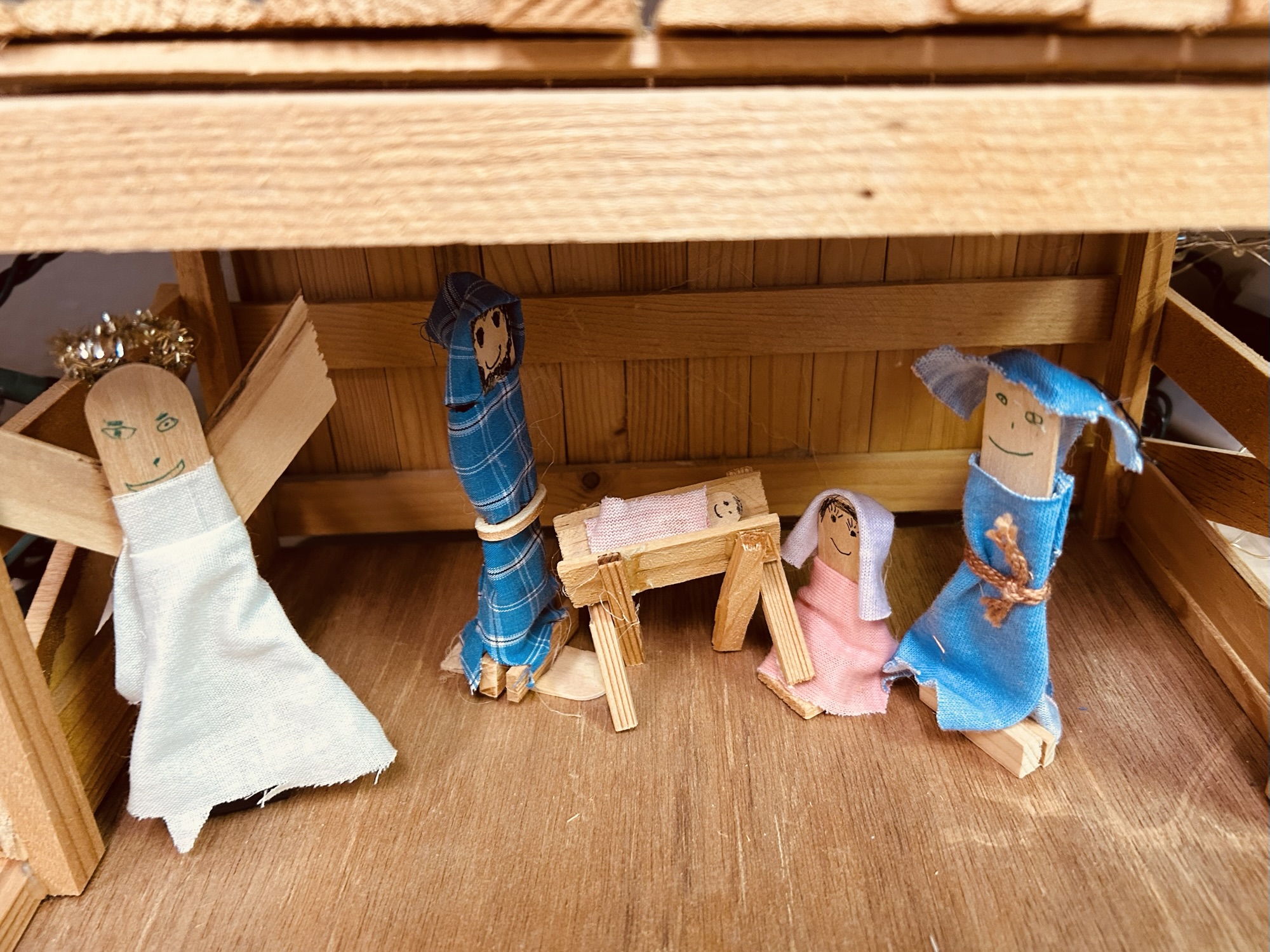
Today, we are hearing the Word of God proclaimed in songs, poems, liturgy and hymns. Music and art move us into the parts of truth that resist scientific explanations or historical reductionism. Some of our deepest human values defy: peace, joy, love, respect, unity, hope, awe, wonder, beauty, belonging, compassion, contentment, friendship, fairness, and justice. We western Christian’s tend to worship only scientific, legal, and historic truth. We ask, “How did Jonah breathe inside the whale?” or “Did God make the world in seven days?” Our faith in literalism can blind us to the truth of art, parable, story, metaphor, icon, and even our own personal experiences. Arguing if the whale is real keeps us from asking “What does Jonah teach us about faith and racism?”. Yesterday, I read an article in the NYT, by Jon Pareles, about the trend in pop music to too directly merge songs to the writer’s personal experiences. Pareless writes “the power of a lasting pop song is that it breaks free of its origins. It’s taken to heart (or hips) by listeners who make it their own…” (Pop Musicians, Please Spare Me the Back Stories Dec 28, 2024) Stories about Jacob and Esau, Corinthian church potlucks, and the rich man and Lazarus engage us at a soul level, pulling us more fully into our humanity and God’s holiness. God speaks with Christmas Nativities, Good Friday crosses, Easter’s Empty tomb, Communion’s Bread and Cup, and Pentecost’s Tongues of Fire . Creeds and sermons often try to explain mysteries, but art allows us to linger in the in-betweenness of holiness and wonder.
As a hymn of the Early Church, our passage drips with images and ideas hard to prove. It is more of a love song than a history lesson.
“Christ is the image of the invisible God, the firstborn of all creation, for in Christ all things in heaven and on earth were created, things visible and invisible, —all things have been created through Christ and for Christ. Christ is before all things, and in Christ all things hold together. Christ is the head of the body, the church; Christ is the beginning, the firstborn from the dead, so that Christ might come to have first place in everything. For in Jesus all the fullness of God was pleased to dwell, and through Christ God was pleased to reconcile to God-self all things, whether on earth or in heaven, by making peace through the cross.”
I have always loved the image of “Christ as the glue of the universe, the one who holds everything together” Richard Rohr calls this the Universal Christ, the deepest incarnation, where God’s presence lingers in the creation, from God watering the desert with snow falling in far away mountains, to Moses bringing us the law: God holds the world together…. God holds us together.
“For in Jesus all the fullness of God was pleased to dwell, and through Christ God was pleased to reconcile to God-self all things, whether on earth or in heaven.”
What does the story of Mary carrying “the fullness of God” in her belly, laboring to push Jesus Christ into the world, nourishing Jesus with her own body, and then laying God down for a nap in the manger say to you”? Does having “the fullness of God” with us elevate our understanding of human sacred worth or make God more vulnerable? It might do both. And perhaps God’s vulnerability somehow might make God more holy?
As I thought about the vulnerability of the manger, my mind turned to the cross. How is it that God allowed us to crucify “the fullness of God” or one “Truly God, Truly human”? (EUB Confession of Faith) Richard Rhor hints that God chose to die so that all the images of violent God might die on the cross. As someone who grew up with a tangible fear of God’s wrath, I like Rohr’s image.
1 John 4 tells us perfect love drives out all fear. We see this way back in Genesis 16 where a pregnant Hagar flees from Abraham and Sarah. An angel saves her life and blesses her and the child in her belly. “Now you have conceived and shall bear a son; you shall call him Ishmael, (God Hears) for the Lord has given heed to your affliction.” This is so early in the Biblical tradition that after her holy experience Hagar “named the Lord who spoke to her, “You are El-roi,” (God who sees) because “I have really seen God and remained alive after seeing God” I wish I could say “once upon a time” there was this belief, that God was so holy that God could not stand to look our sinfulness, but I heard that message growing up. Evidently this was not the case for Hagar or is it for us.
In Genesis 32, Jacob wrestled with God all night, getting a new Name Israel (one who strives with God). When Jacob (the Trickster) woke up alive, that Jacob-now-Israel named the place, “Peniel”, (meaning the face of God) saying, “For I have seen God face to face, yet my life is preserved.”
Second Corinthians 4 sings “For it is the God who said, “Light will shine out of darkness,” who has shone in our hearts to give the light of the knowledge of the glory of God in the face of Christ.” Earlier in advent I shared John Wesley’s sermon, “The Spirit of Bondage and of Adoption”, where Wesley taught that: “Those who are influenced only by slavish fear, cannot be termed the children of God;” … they have not yet seen the light of the glorious love of God, in the face of Jesus Christ.”
So come let us adore, ponder, dwell in the images of “the fullness of God” nurtured in Mary’s womb, nourished on Mary’s breast, sleeping in the manger, carried as a refugee to Egypt, who would endure the cross. Oh let us become open to the truth within: Christmas’ Nativities, Good Friday’s crosses, Easter’s Empty tomb, Communion’s Bread and Cup, and Pentecost’s Tongues of Fire, wooing us towards a God, whose Love comes to dwell with and even within us. Amen.
 pastorpaulpurdue