
Remarks at Run Walk Nashville Pedestrian Memorial Service 2/22/25
Hello, I’m Paul Purdue. I’m the Pastor at Belmont United Methodist Church in Hillsborough Village. When Wesley asked me if I could speak at the memorial. I was happy to do so because on July 1 of this year my brother was involved in a bicycle wreck in Beersheba Springs, Tennessee. John, an avid cyclist, broke 17 bones including 10 ribs. If not for drivers coming to his aid, the quick work of the volunteer fire department, a helicopter ambulance, the surgeons, nurses and staff at Erlanger Hospital and the physical therapists at Siskin, a helmet, and John’s hard work, my brother would’ve died. The Grundy County sheriff ruled John’s crash as a motor vehicle accident. Someone hit my brother and did not own up to it. Other people saw John along the roadway and helped save his life. Last month, John was cleared by his doctors for full activity and celebrated by taking a hike in the snow.
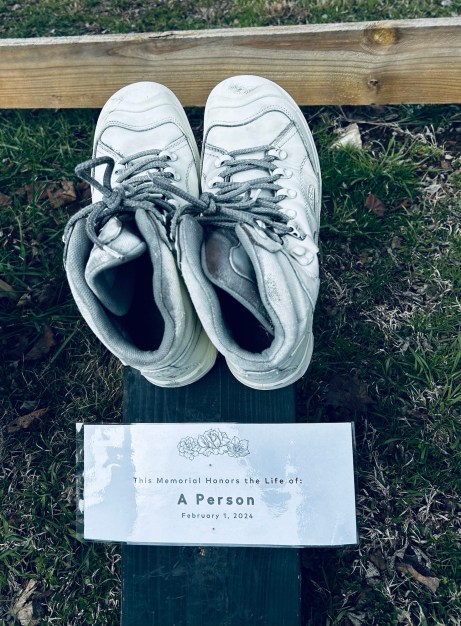
28 people walking or biking were killed
by Nashville drivers in 2024
Having almost lost my beloved brother, I come today to express our community’s collective sorrow at your loss of a beloved child, parent, aunt, friend, running buddy, marine, neighborhood fixture, spouse or partner. I am so glad you’re here, that you are taking time to mark your loss and remember your loved one’s life. It is in that painful remembering, not of our loved ones death, but in their living that we begin to find our way into healing. So I encourage you to remember their lives. See them. Say their names. Share their lives. Celebrate the beauty you once shared. Our remembering, painful as it can be, moves into a second stage of grief, we grieve but we can find some gratitude for their living. So say their names, tell their stories, honor their lives, remember.
And some of you may have come here today with grief and with anger. You long for justice and a changed society. It is okay to be angry. As a Christian person, I always look to Jesus to guide my living. In Mark’s third Chapter, we read that Jesus was grieved and angry at the church people’s callousness to one person’s suffering. During Holy Week, Jesus shuts down all commerce in the Temple Palace complex, flipping over tables for justice. That feels like action fueled by anger at injustice. Perhaps, injustice anywhere should make us mad. In her excellent book, The Wounds Are The Witness: Black Faith Weaving Memory into Justice and Healing, Dr. Yolanda Pearce, Dean of the Vanderbilt Divinity School writes “That healing is an act of personal restoration but also an active radical social reconstruction.” Inner healing may come as you help transform the ways we look out for each other as we walk, bike and drive. Your anger can create change: bike lanes, cross walks, sober drivers, a pedestrian minded city. It is okay to be angry, but be careful about holding onto anger alone, our Buddist friends remind us that anger can burn a hole in our souls.
As a pastor in the Christian tradition, we always look to the Scriptures for guidance. One of the beloved stories in our tradition is the Feeding of the 5000. We Christians often focus on the miracle more than the way Jesus treated people. Matthew 14 tells us “When Jesus arrived, Jesus saw a large crowd and had compassion on them, healing their sick.” This appears to be the heart of Jesus‘s work: Jesus saw people and is inviting us to see people. Jesus gave us two commandments “to love God and love our neighbors as we love ourselves”. I won’t ask you to grade the Christian community on how we are doing. “Loving your neighbor as yourself” means seeing other people. It means moving around the world with eyes of compassion. If people are unhoused, help them find homes. If they are hungry, feed them. If they are walking: see them. If they are biking: give them space. If you drink, do not drive. Value people enough to put down your phone while driving. See people. Pay attention. Keep your eyes open, be sober, protect human life.
But we must not only see people, we need to take care of them. In this story, Jesus taught and healed people all day long and “As evening approached, the disciples came to Jesus and said, “This is a remote place, and it’s already getting late. Send the crowds away, so they can go to the villages and buy themselves some food.” Jesus replied, “They do not need to go away. You give them something to eat.”” (Matthew 14)
So often we want to send other people’s problems away, we have a car, so we do not care much about those walking or biking. Jesus says “you meet the needs of others”. These 28 witnesses to our inattention call out to us today. They call us to care about human life. They ask us to see people, to create safer streets, to provide more bus routes, to invest in better crosswalks, to care about people more than cars, to bring justice for reckless driving victims, to change our culture and laws so as to end all impaired and distracted driving. Let us see people, value life and invest in human centric infrastructure. Pay attention. See people. Comfort the victims. Say their names. Remember their lives. Transform our communities. Bring healing. Listen to the cries. Help make people safer and healthier. See people. Care for people. Care for those who are grieving. Work for social change. Amen.
 pastorpaulpurdue